
Role
Program Management Lead
Scope
Execution & Strategy
Impact
~5% Sign-up Uplift
Sector
AdTech / Media
Context
Spotify’s advertising business was scaling rapidly, but audio advertising was still an emerging channel for marketers. We needed a centralized platform that could both educate advertisers and drive measurable acquisition.
A Vision Grounded in Customer Needs
We developed a clear vision and strategy that was grounded in customer needs. By partnering with the insights team, we developed a deep understanding of customer personas and the specific information they required to make a decision to advertise on Spotify.
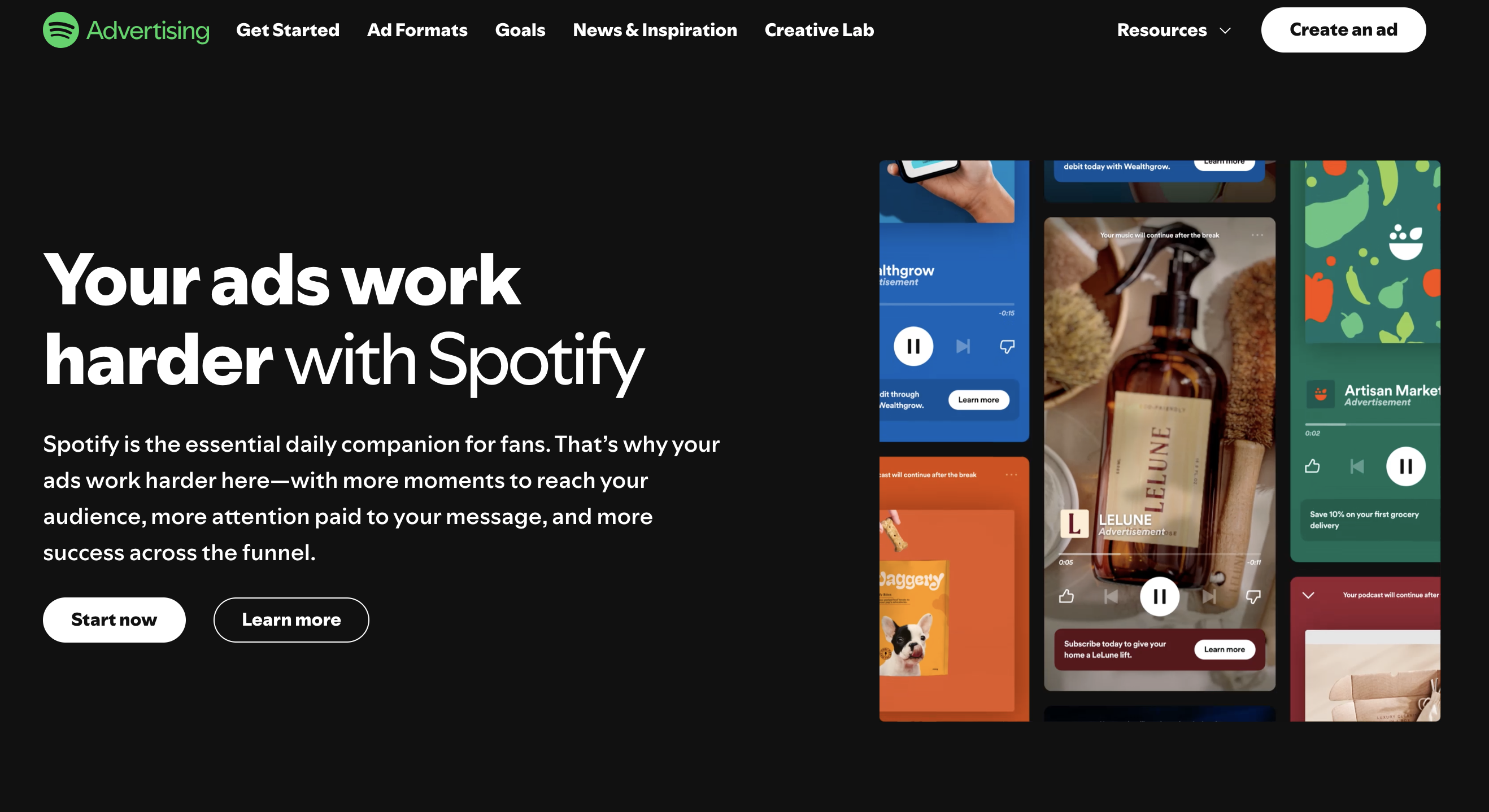
My Role
As the Program Manager Lead to drive the development and delivery of the project, my goal was to ensure we met business goals while creating a customer-focused experience that showcased the benefits of audio advertising.
Key Responsibilities
As Program Lead, I was responsible for end-to-end delivery:
- Established the operating model and roadmap to deliver against an aggressive launch timeline.
- Drove cross-functional alignment across Product, Marketing, Design, Engineering, Insights, Legal, and agency partners.
- Anchored strategy in advertiser insights, positioning the site as both an education platform and conversion funnel.
- Grounded the website strategy in advertiser personas and decision-making needsand developed the value proposition and content framework to articulate the benefits of audio advertising.
- Led executive alignment. Managed leadership reviews, approvals, and executive communications.
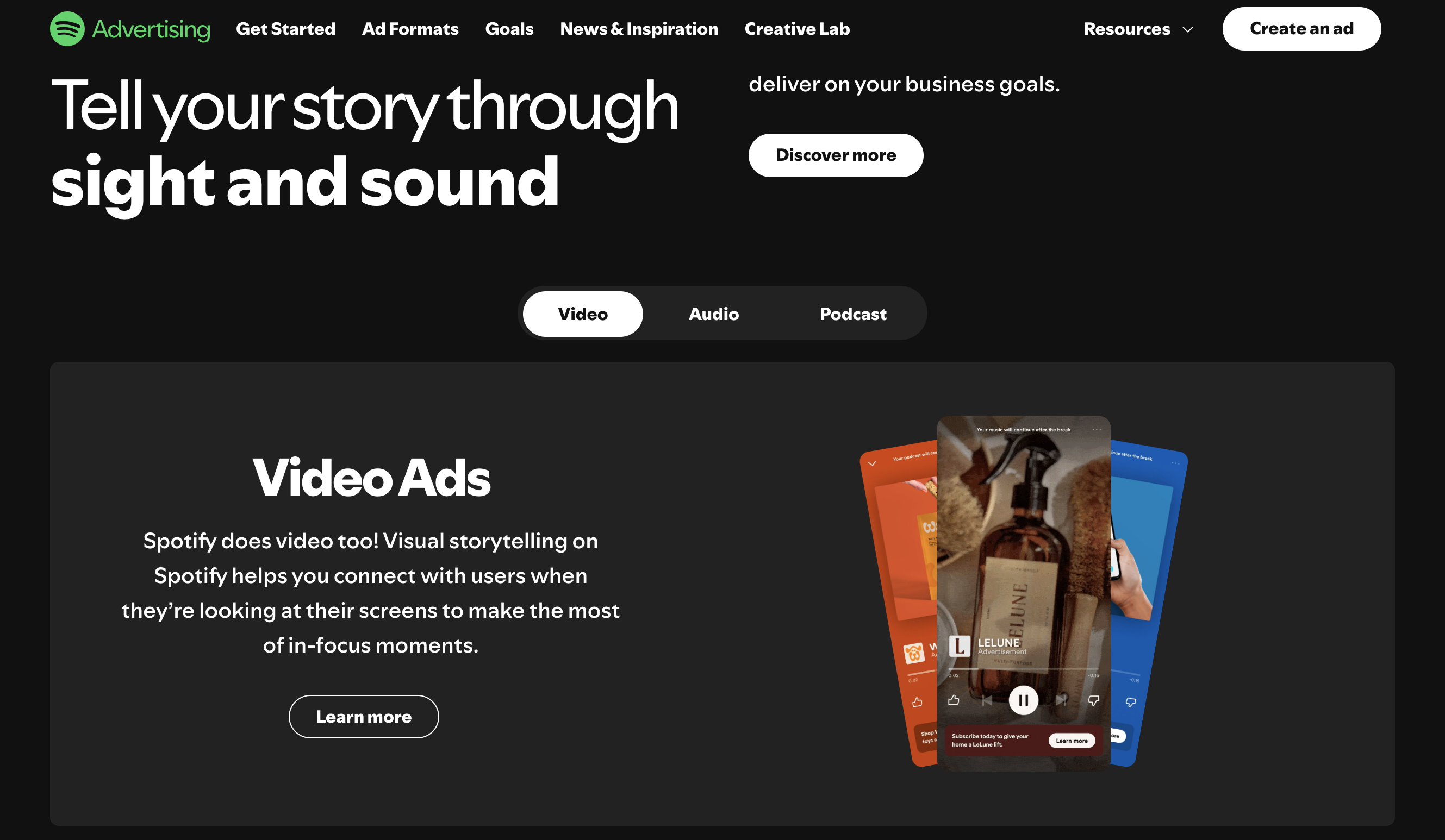
Educating on Ad Formats
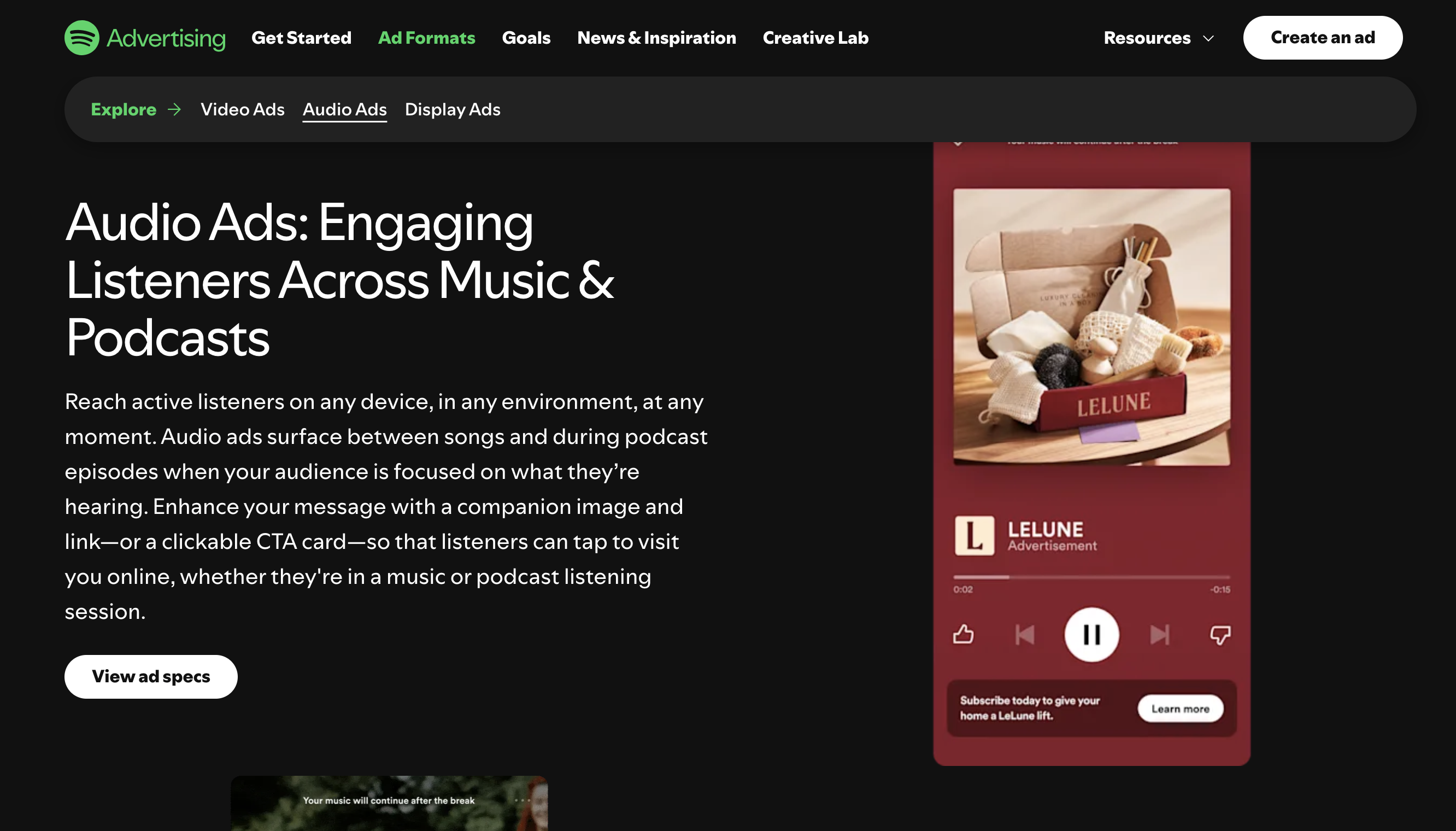
Showcasing the Audio Medium
Impact & Results
- → Established the foundational marketing and acquisition framework for Spotify Advertising.
- → Drove an immediate ~5% uplift in self-serve platform sign-ups.
- → Increased overall site traffic and advertiser engagement.
- → Created a scalable structure for ongoing iteration and optimization.
Lessons Learned
"In high-growth environments, the ability to adapt post-launch is as important as the launch itself."
Post-launch, we implemented a continuous improvement model — aggregating user feedback, analyzing behavioral data, and developing a structured optimization roadmap to improve conversion and clarity.